What AI Performance Computing Gets Right About Throughput, Latency, and Energy
When engineers talk about AI performance computing, they often focus on raw speed. But speed alone does not tell the whole story. A system that processes data quickly but consumes enormous power may not be practical to run at scale. One that handles huge volumes of work every second might still introduce delays that ruin the user experience. The real challenge is balancing three competing priorities: throughput, latency, and energy use.
This balance matters because AI workloads are not all the same. A real-time voice assistant cannot afford noticeable lag, but a batch image-processing pipeline can wait a little longer if it saves energy. The hardware and software choices that work for one task may be wrong for another. Understanding how throughput, latency, and energy interact helps you evaluate AI systems more critically, whether you are selecting hardware, designing a model, or planning a deployment.
What Throughput, Latency, and Energy Actually Mean
Throughput is the amount of work a system completes in a given time. In AI, that might be the number of inference requests handled per second or the volume of training data processed per hour. High throughput is desirable when you need to serve many users or process large datasets efficiently.
Latency is the time it takes to complete a single unit of work, measured from request to response. Low latency is critical for interactive applications like chatbots, autonomous driving, or real-time translation. Even a small delay can make the system feel sluggish or unsafe.
Energy use is the power consumed during computation. It shows up in electricity bills, cooling requirements, and the environmental footprint of a data center. For mobile or edge devices, energy use also determines battery life. Minimizing energy consumption is increasingly important as AI scales to millions of devices.
The Tension Between Them
These three metrics do not move in the same direction. Pushing for higher throughput often means processing more requests in parallel, which can increase latency if the system becomes congested. Reducing latency may require faster, more energy-intensive hardware that draws more power. Cutting energy use might mean running at lower clock speeds, which reduces both throughput and latency performance.
The trade-offs are not fixed, though. Smart system design can shift the balance. For example, batching multiple inference requests together improves throughput without necessarily increasing latency for each individual request, as long as the batch size is tuned correctly. Similarly, using specialized hardware like tensor processing units or efficient neural network architectures can reduce energy consumption without sacrificing speed.
How Hardware Choices Affect the Balance
The hardware that runs AI workloads has a direct impact on these metrics. General-purpose CPUs offer flexibility but may not deliver the throughput or latency needed for demanding AI tasks. Graphics processing units (GPUs) excel at parallel processing, making them good for high-throughput training and inference. However, they can consume significant power, especially when running at full capacity for long periods.
Specialized AI accelerators, such as those designed for inference, often provide better energy efficiency for specific model types. They may also reduce latency by streamlining the computation path. The trade-off is that they are less flexible: a chip optimized for convolutional neural networks might not run transformer models as efficiently.
Memory capacity also plays a role. Models that do not fit entirely in fast memory must repeatedly fetch data from slower storage, increasing latency and reducing throughput. Systems with larger, faster memory can keep more data close to the compute units, improving both metrics but often at higher energy cost.
Software and System-Level Strategies
Hardware is only part of the equation. Software optimizations can dramatically affect how throughput, latency, and energy balance out. Model quantization, for instance, reduces the precision of numbers used in computation. This makes models smaller and faster to run, cutting both latency and energy use while maintaining acceptable accuracy.
Pruning removes unnecessary connections in a neural network, shrinking the model size and speeding up inference. Knowledge distillation trains a smaller model to mimic a larger one, achieving comparable performance with less computation. These techniques are especially useful for edge devices where energy and memory are limited.
At the system level, scheduling algorithms can decide when to run which workloads. Batch processing during off-peak hours saves energy by allowing hardware to run at lower, more efficient utilization levels. Real-time workloads get priority to minimize latency, while background tasks fill the gaps.
Why This Matters for Real Deployments
For organizations building AI systems, the balance between throughput, latency, and energy has practical consequences. A recommendation engine that serves millions of users daily needs high throughput to handle the load, but it also needs low enough latency to keep users engaged. If the system consumes too much power, the operational costs may eat into the budget for other improvements.
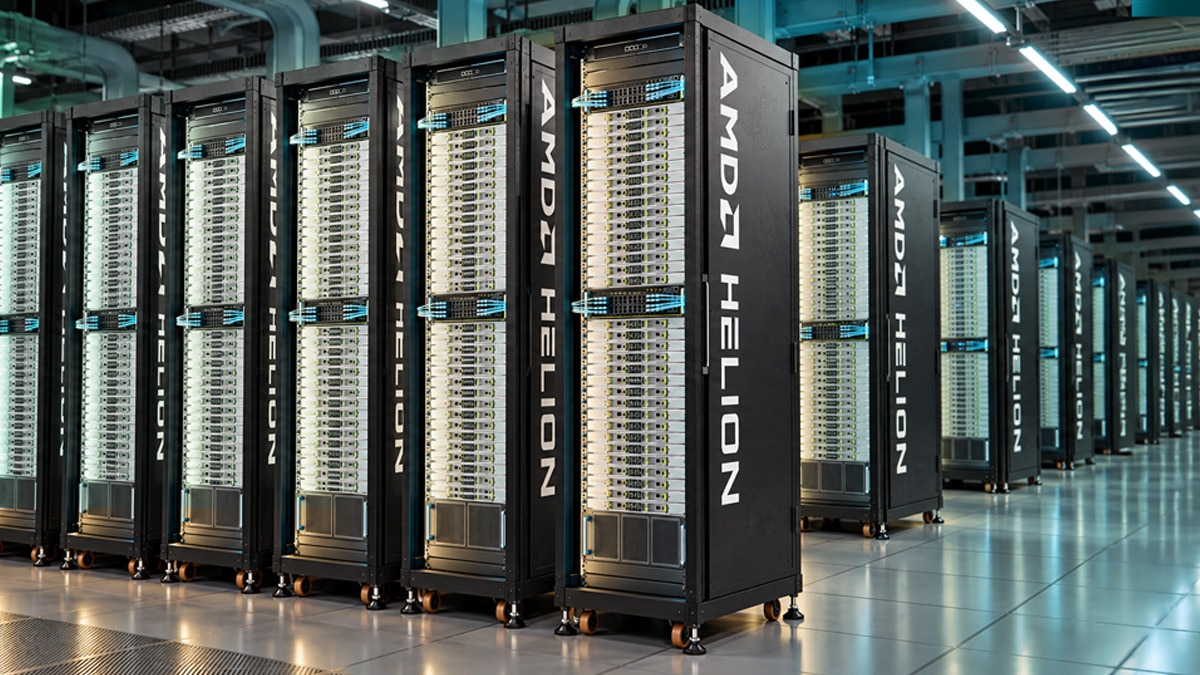
In data center environments, power consumption directly affects cooling requirements and overall infrastructure costs. Reducing energy use by just a few percent across thousands of servers can lead to significant savings. This is one reason why hardware vendors invest in energy-efficient designs and why software teams look for ways to do more with less computation.
For edge deployments, such as smart cameras or industrial sensors, energy efficiency is often the primary constraint. A device running on battery power cannot afford to waste energy on unnecessary computation. Here, the priority shifts toward minimizing energy use while maintaining acceptable throughput and latency for the specific application.
Benchmarking Helps, But Context Matters
Standard benchmarks measure throughput, latency, and energy in isolation. They are useful for comparing hardware options, but they do not capture how a system will behave under real-world conditions. A chip that scores well on a benchmark may still perform poorly when running a specific model with a particular batch size on a particular workload.
When evaluating AI systems, it helps to test with your own data and model architecture. Measure throughput under the expected load, latency at the tail end of the distribution (not just the average), and energy consumption over a typical work cycle. Only then can you see how the trade-offs play out for your use case.
Scalability is another factor that benchmarks do not always reflect. A solution that balances throughput, latency, and energy well at a small scale may break down when the workload grows. Reliability also matters: a system that crashes under heavy load wastes all the energy and time invested in the failed computations.
Practical Steps for Better Balance
If you are designing or selecting an AI system, keep these principles in mind. First, define your primary constraint. Is it latency? Energy? Throughput? Knowing which matters most helps you make trade-offs consciously.
Second, consider the workload profile. A system that handles a steady stream of requests may benefit from different optimizations than one that experiences bursts of activity. Batch sizes, model architectures, and hardware choices should align with the actual pattern of work.
Third, monitor all three metrics continuously. Energy use is often overlooked until the electricity bill arrives. Including it in performance dashboards makes the trade-offs visible and helps teams make informed decisions.
Fourth, explore software optimizations before upgrading hardware. Quantization, pruning, and efficient model design can often improve all three metrics at once, delaying or avoiding the need for more expensive hardware.

Finally, remember that the balance will shift as technology evolves. New hardware architectures, such as those designed specifically for AI, may change the trade-offs. Keeping an eye on developments in parallel processing, memory technology, and energy-efficient computing will help you adapt.
The Bigger Picture
Balancing throughput, latency, and energy is not just an engineering exercise; it has real implications for the cost, sustainability, and user experience of AI systems. As AI scales to more applications and more users, getting this balance right becomes increasingly important. Organizations that invest in understanding these trade-offs will be better positioned to build systems that are fast, responsive, and efficient.
Enterprise AI solutions need to deliver on all three fronts to be viable at scale. The systems that succeed will be those that treat energy as a first-class metric, not an afterthought, while still meeting the throughput and latency demands of real applications. Enterprise AI solutions that ignore the energy dimension may find themselves with high operational costs and limited growth potential.
For anyone involved in AI development or deployment, learning to think about throughput, latency, and energy together is a valuable skill. It turns abstract performance numbers into practical design decisions, and it helps ensure that the systems we build are not just powerful, but also practical and sustainable over the long term.